
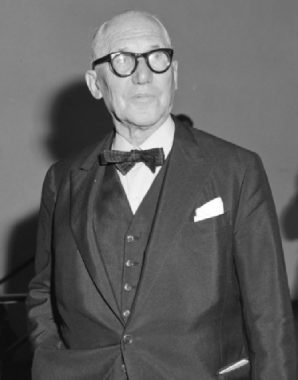
Charles-Édouard Jeanneret (6 October 1887 – 27 August 1965), known as Le Corbusier (French: [lə kɔʁbyzje]), was a Swiss-French architect, designer, painter, urban planner, writer, and one of the pioneers of what is now called modern architecture. He was born in Switzerland and became a French citizen in 1930. His career spanned five decades, and he designed buildings in Europe, Japan, India, and North and South America.
Dedicated to providing better living conditions for the residents of crowded cities, Le Corbusier was influential in urban planning, and was a founding member of the Congrès International d’Architecture Moderne (CIAM). Le Corbusier prepared the master plan for the city of Chandigarh in India, and contributed specific designs for several buildings there.
On 17 July 2016, seventeen projects by Le Corbusier in seven countries were inscribed in the list of UNESCO World Heritage Sites as The Architectural Work of Le Corbusier, an Outstanding Contribution to the Modern Movement.
Work
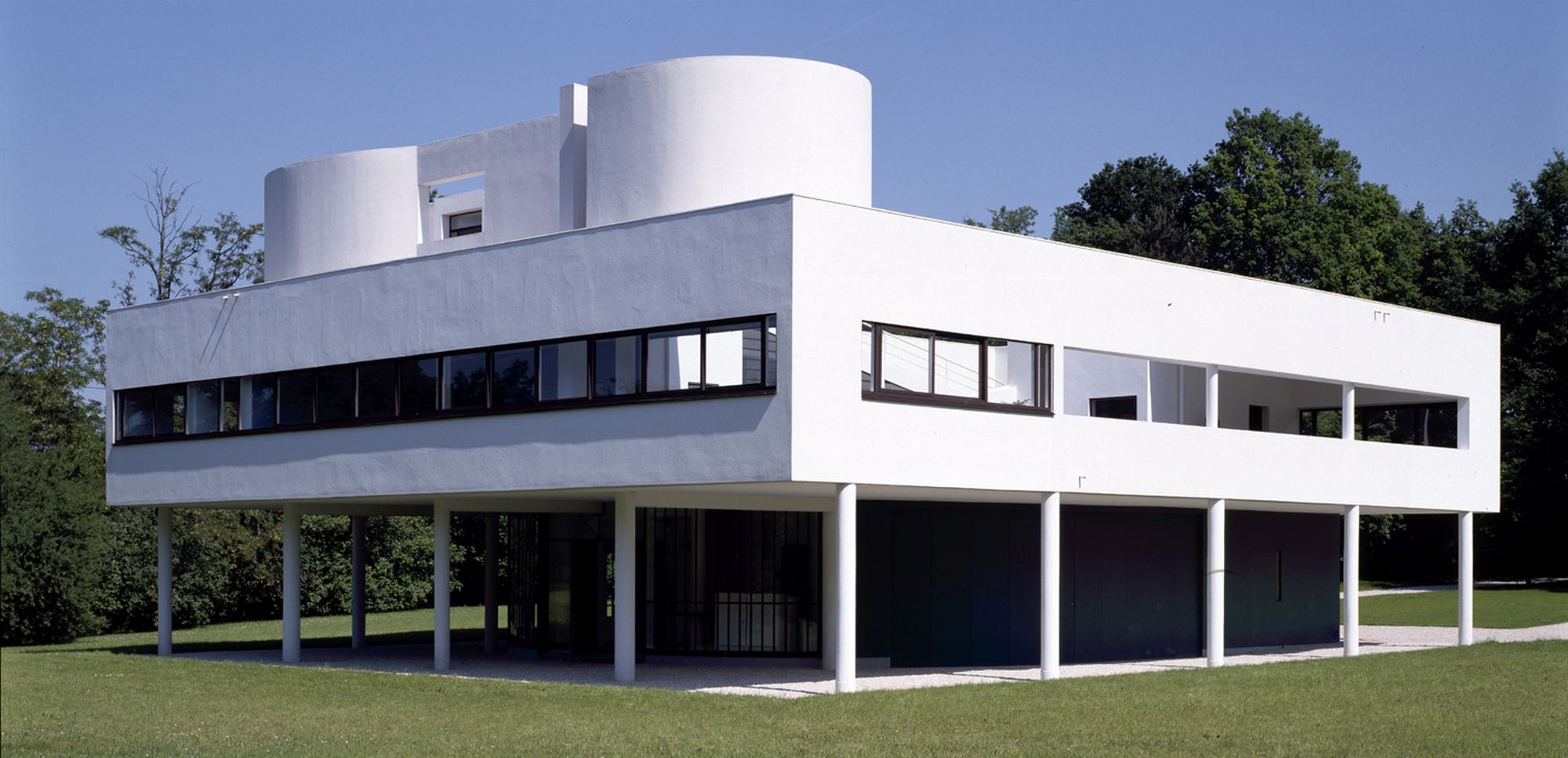
Villa Savoye succinctly summed up the five points of architecture that he had elucidated in L’Esprit Nouveau and the book Vers une architecture, which he had been developing throughout the 1920s. First, Le Corbusier lifted the bulk of the structure off the ground, supporting it by pilotis, reinforced concrete stilts. These pilotis, in providing the structural support for the house, allowed him to elucidate his next two points: a free façade, meaning non-supporting walls that could be designed as the architect wished, and an open floor plan, meaning that the floor space was free to be configured into rooms without concern for supporting walls. The second floor of the Villa Savoye includes long strips of ribbon windows that allow unencumbered views of the large surrounding garden, and which constitute the fourth point of his system. The fifth point was the roof garden to compensate for the green area consumed by the building and replacing it on the roof. A ramp rising from ground level to the third-floor roof terrace allows for a promenade architecturale through the structure. The white tubular railing recalls the industrial “ocean-liner” aesthetic that Le Corbusier much admired.
Read here a Master Jinsai’s Teaching about Le Corbusier!